
Collection
The Korea collection
As with the Chinese art, the Fischers’ access to Korean art was through the agency of Japanese dealers. In 1905, they went to Korea for the first time, where they made contact with Germans based there, for example the teacher Johannes Bolljahn, who taught German at one of Korea’s first state schools. For travels into the interior of the country, Fischer made use of the knowledge of Christian missionaries living in Korea, who not infrequently combined their missionary activity with collecting Korean art.
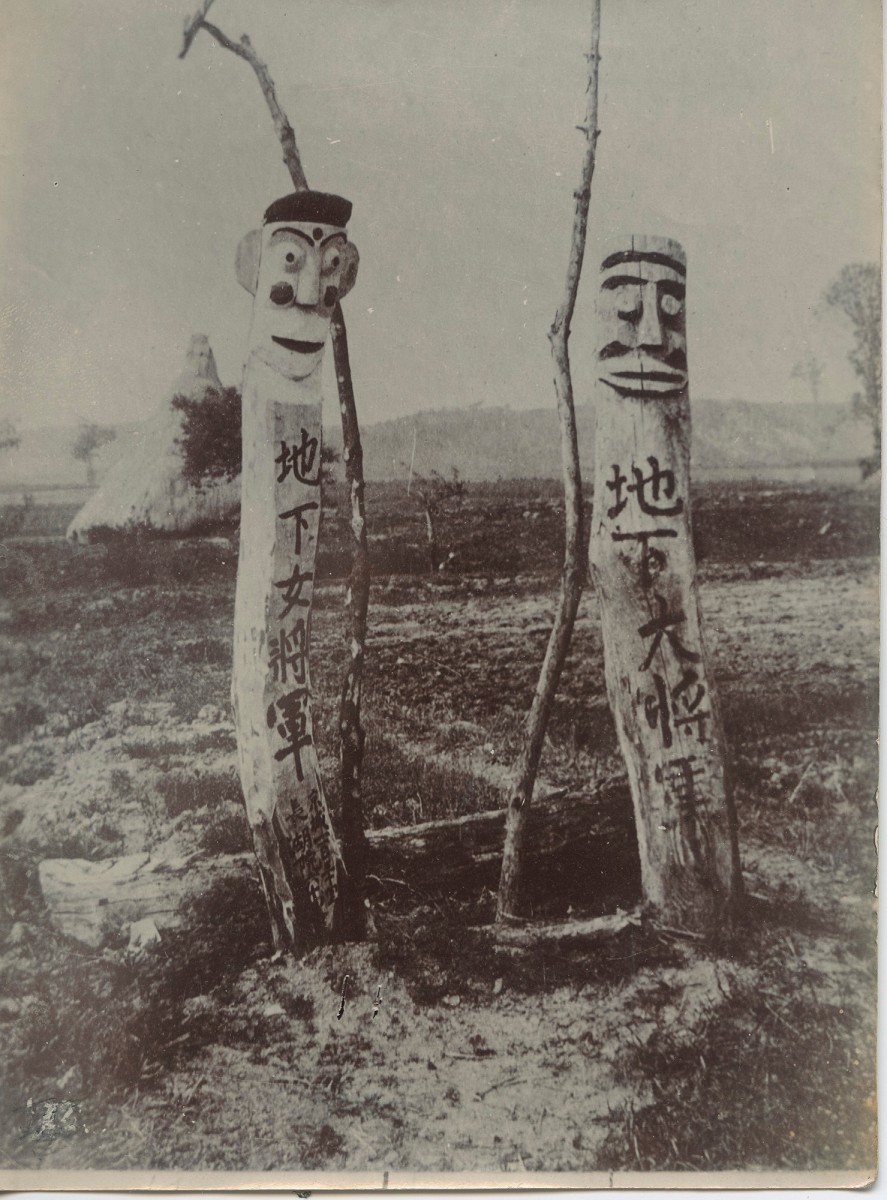
The Fischers were mostly interested in seeking out the origins of Japanese Buddhist art in Korea. As he found no ‘ancient Buddhist’ artworks either in Seoul, or in Taegu or Songdo, Fischer set off with a horse caravan into the Diamond Mountains. Disappointed, he reported finding no witnesses to ancient or high-quality art. Most had been destroyed by fire or war, and what was left had been plundered by the Japanese warlords. In this sense, Fischer’s notes reflect, rather, his observations of everyday life and shamanic religiosity.
On their purchasing expeditions of 1910/1911, the Fischers acquired most of the pottery and bronze, as well as important works of Buddhist painting, which, on account of their great rarity have been undergoing restoration and re-mounting in the National Museum in Seoul at the expense of the South Korean state since 2016. The collectors visited the museum in the imperial Eastern Palace, which had been recently set up by the Japanese occupation forces, on a number of occasions. Fischer took the opportunity while here to train his eye and critically assess the items offered him for sale, and also to obtain ideas for what to buy. Interestingly, he had no high regard for either the quality or the state of preservation of secular Korean painting of the 16th and 17th centuries, and hence made no effort to acquire works of this period.



Focuses
Pottery
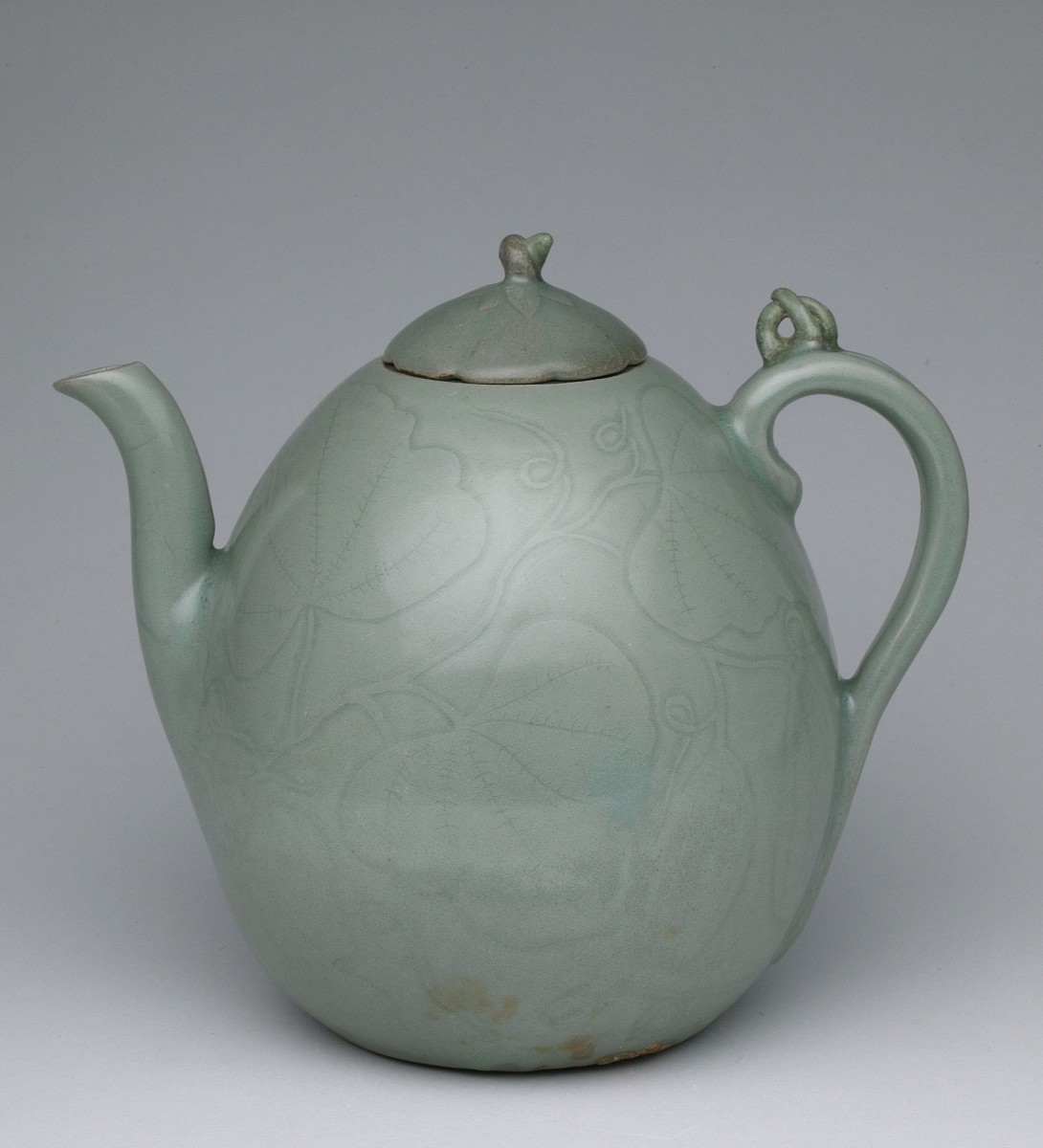


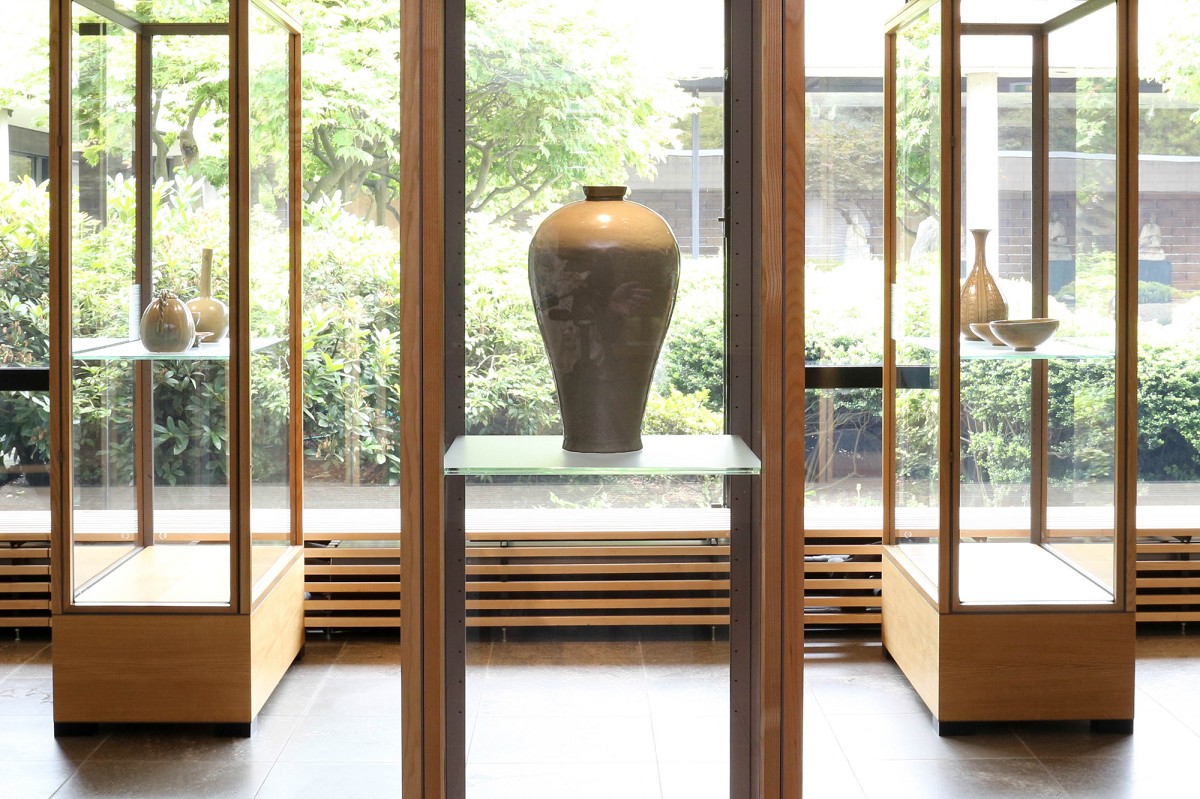
Korean pottery is well represented in the collection, with more than 70 items. Most is celadon (greenware) of the 12th and 13th centuries. Its greenish, bluish or pale-grey glaze was inspired by the ware of the Chinese Wu-Yue dynasty (907–978) from south-east China. The Korean potters, however, modified both the form and the glaze, developing, from the second half of the 12th century, a new technique using a clay slip (sanggam). The museum also possesses 18th-century porcelain, for example a storage pot painted in cobalt blue, which was probably made in the royal factories. According to Korean experts, our collection is among the best in Europe.
Buddhist painting


In Korea, it was difficult at the start of the 20th century to acquire Buddhist painting. Many pictures had been stolen during the military campaign (1592–1598) of Toyotomi Hideyoshi and taken to Japanese temples. One particularly fine piece, which Fischer bought in Japan, assuming it to be Japanese and not Korean, is the Bodhisattva ‘Water-Moon Guanyin’, which stands out through its elaborate decor and translucent veil. Among the paintings of the middle of the Joseon dynasty (1392–1911), the picture ‘Scenes from the Life of Buddha: the Departure’, dating from the late 15th century, stands out. During this period, the Korean rulers turned away from Buddhism and adopted the state philosophy of Neo-Confucianism from China. Increasingly, Buddhism moved into the private sphere, where it was practised in particular by the female members of the court, and by broad sections of the public.
Secular painting
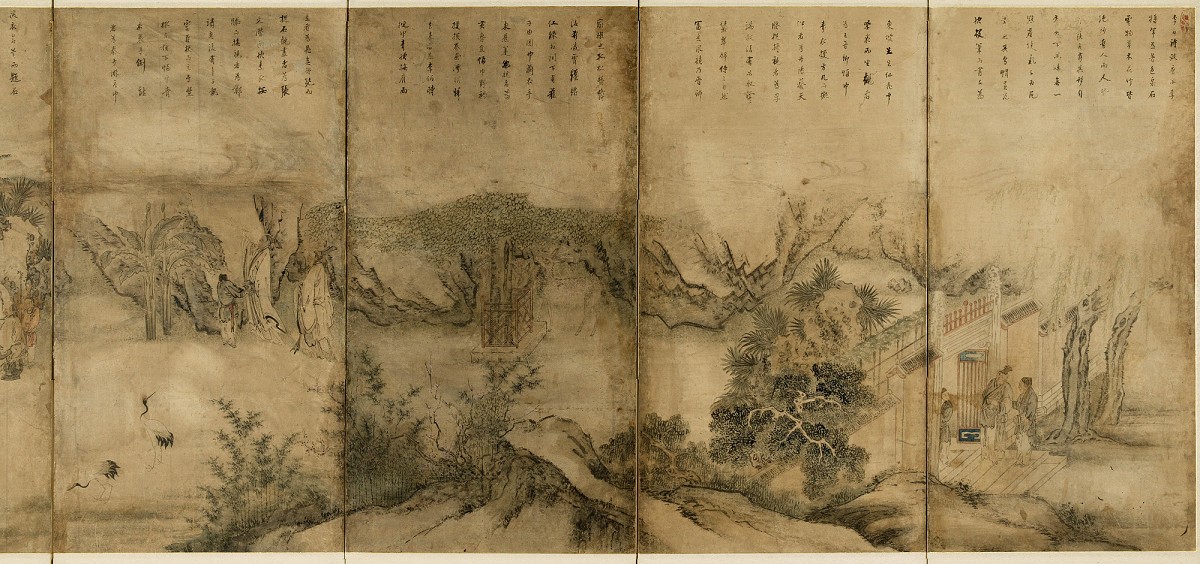




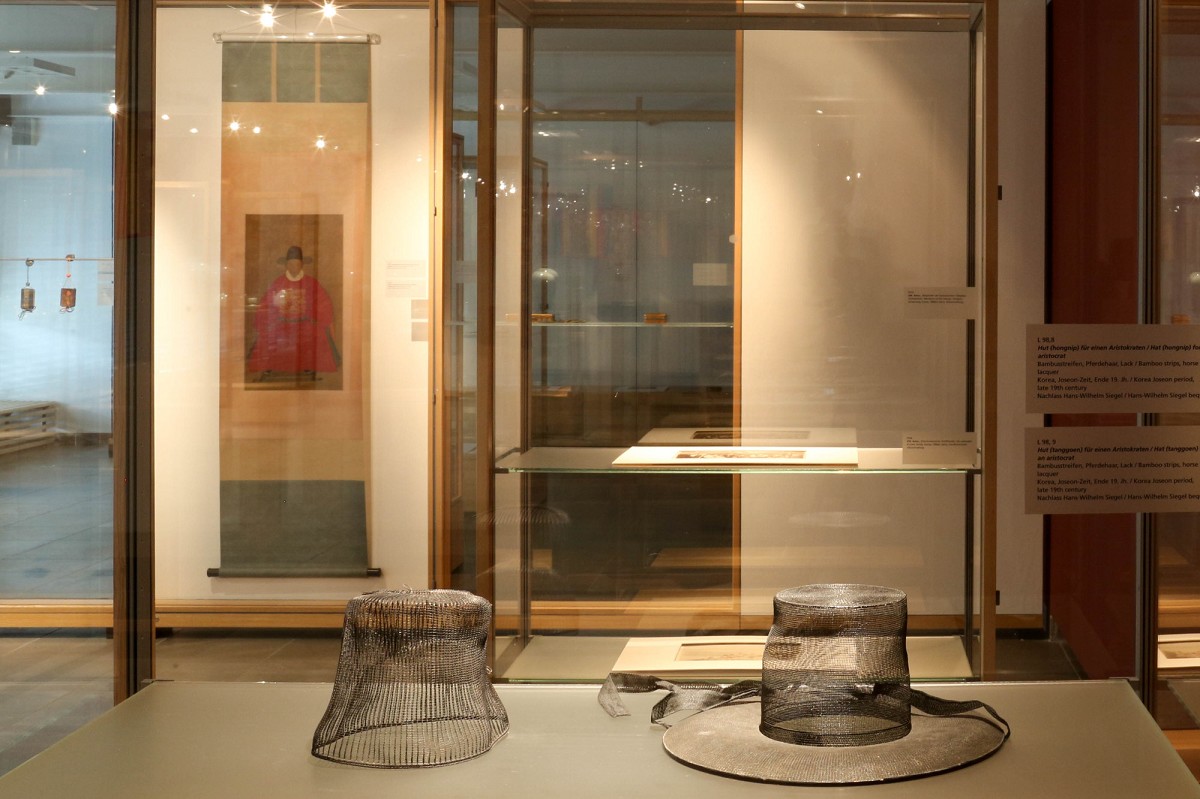
The painting of the Joseon dynasty (1392–1911)reflects the taste of the educated elite (yangban), which was characterized by Neo-Confucianism and the study of classical Chinese literature. Accordingly, the upper class held the ideal of Chinese scholar-painting in high regard, preferring monochrome ink painting. ‘Scholar Riding a Donkey’ is a good example. The subject stands for the virtuous Confucian civil servant, who prefers solitude to a corrupting political career. The screen ‘Elegant Assembly in the Western Garden’ illustrates scenes of a Chinese scholar assembly said to have taken place in 1088. Famous literary figures met in the Western Garden to devote themselves to the elegant pursuit of poetry, painting and writing, as well as making music and disputation. The beholder enters the garden from the right along with the arriving guests (detail). The fourth panel shows the calligrapher Mi Fu (1051–1107) wielding his brush against a rock face (detail), while the following scenes present famous scholars writing and painting (detail). A broad band of cloud frames the composition at the top, and bears an inscription dated 1794, which quotes the Chinese text with the description of the ‘Elegant Assembly in the Western Garden’. The painter is identified as one Songam, who is to be placed on stylistic grounds in the orbit of the court painter Kim Hong-do (1745–1806).
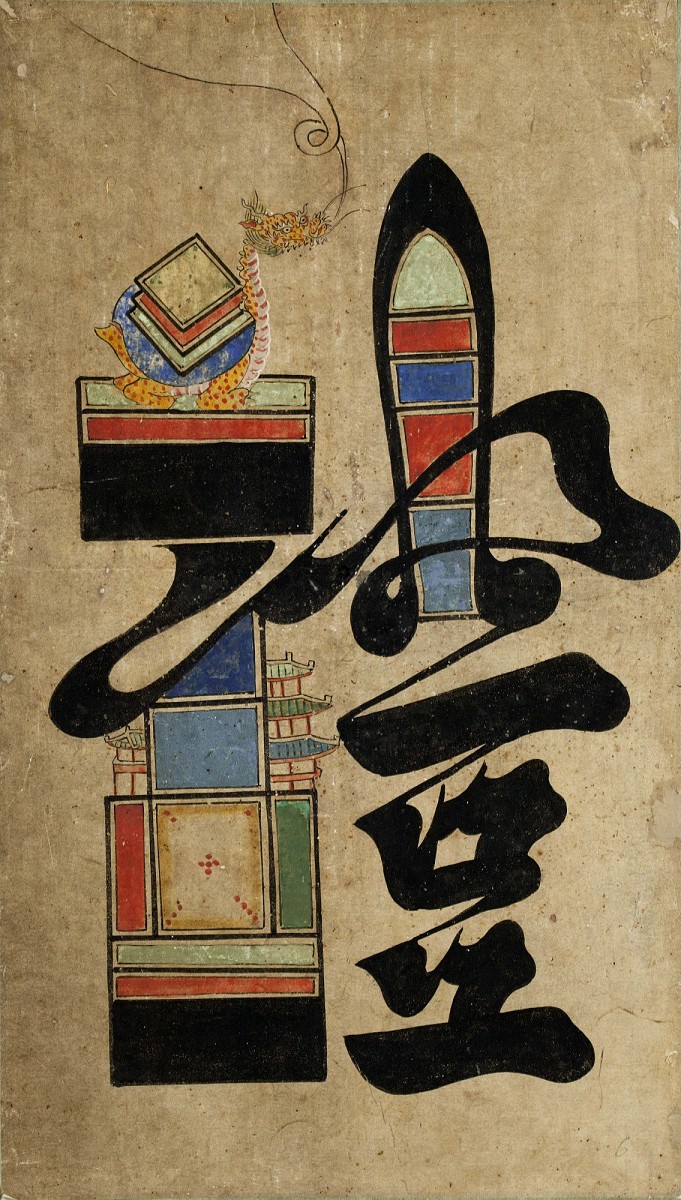
The genre of vernacular painting executed in glowing mineral colours (minhwa) is represented by works from the estate of Kurt Brasch, and exemplified by pictures with depictions of symbols of good luck, material wellbeing, and long life, which appear in combination with the stylized characters representing the Confucian virtues.
Modernist paintings and prints


In Korean art history, Modernism begins with the Japanese colonial period starting in 1910. In 1911, Korea’s first art academy opened, the ‘Institute for Calligraphy and Art’ (Sohwa Misulhoe). For the first time, the word for art was used in the name of an institution. Among its graduates were Yi Sang-bom (1897–1972) and Kim Eun-ho (1892–1978), who in the following decades became highly influential exponents of Modernism. From the 1950s, the Korean art scene opened up to the various international currents. Chang Woo-soung (1912–2005), one of the leading pupils of Kim Eun-ho, was famous for his figure-painting using sketchily executed outlines. The pictutre ‘Old Man’ stands out with its pastel tones and balanced composition.
With the support of the Circle of Friends, the museum acquired a job lot of Minjung (or vernacular) woodcuts in the 1980s. They reflect the world of the Korean workers and farmers, which was characterized by social and political tensions, the result of rapid industrialization and strict military rule. The woodblock prints take up these themes, and, stylistically, follow the social-critical works of woodcut artists such as Lu Xun (1881–1936) and Käthe Kollwitz (1867–1945).
Metalwork/Buddhist objects


During the Goryeo dynasty (918–1392), Buddhism flourished as the state religion. Testifying to this are the ritual objects of bronze, such as a sûtra container to hold copies of Buddhist texts made by the faithful in order to accumulate merit. The simple formal beauty of Goryeo-period bronzes can also be admired in the thinly hammered-out alms-dishes for monks. A lot acquired in 2005, including a water jug of the kundika type, used to sprinkle purifying water prior to Buddhist ceremonies, replaced losses suffered in the war.
Wood and lacquer objects


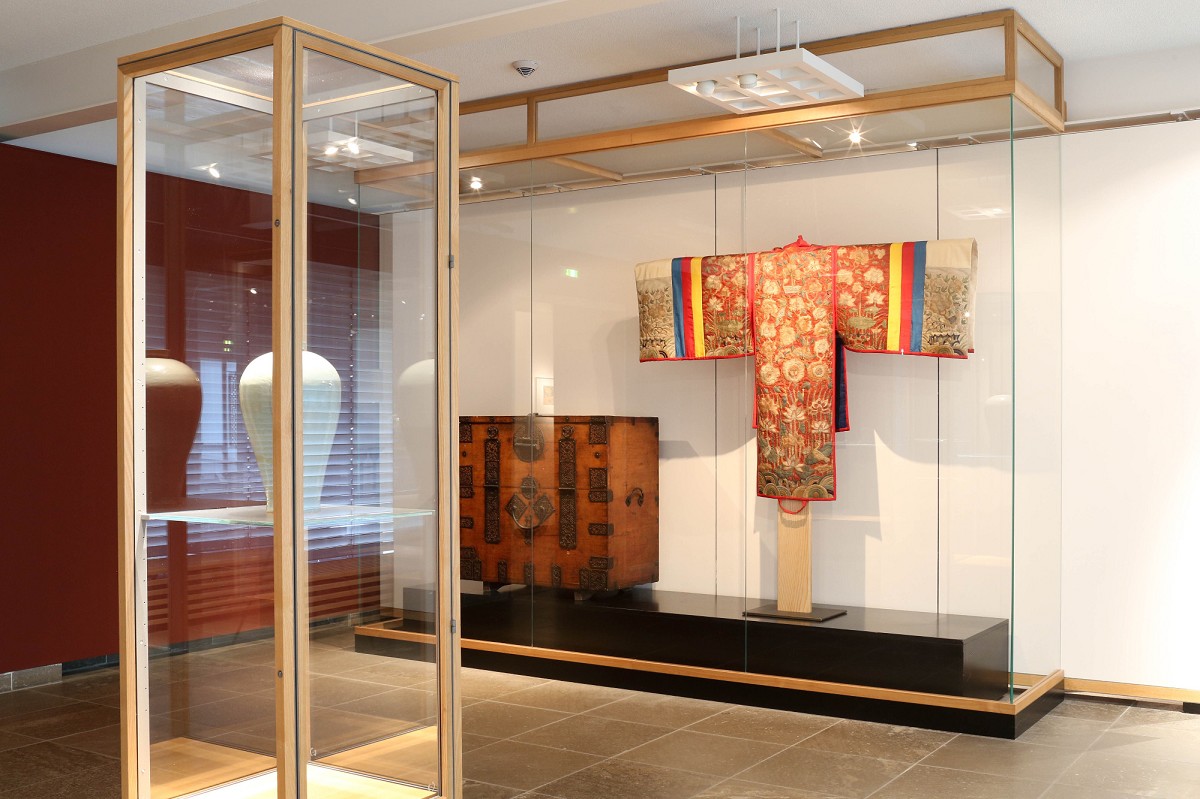
The earliest and best-known Korean lacquer item in our possession is a gift-box for a wedding (yemulham) dating from the 15th century. Werner Speiser acquired the piece in the early 1960s from the acclaimed art dealer Mayuyama Ryûsendô in Tokyo. The decor, of mother-of-pearl and horn with underpainting, like the brass wires, is inlaid in the black lacquer ground. The two phoenixes identify the box as a wedding gift. Filled with jewellery, it was presented to the bride by the groom.
The only important wood sculpture in the collection is the figure of a ‘boyish servant’ (dongja) of the 17th or 18th century. Dongja were depicted with childlike bodily proportions and facial features, and belonged to the retinues of Buddhist deities. Our example is carrying a phoenix like a toy in both hands up to his chest; it was probably one of a large group of dongya, each holding a different animal symbolizing one of the five points of the compass.
with kind support

The furnishing of the Korea Gallery was financed with the support of the Korea Foundation
Collection
Opening times
Tuesday to Sunday
11am – 5pm
Every first Thursday in the month
11am – 10pm (except Mai 1)
Closed Mondays; open on All Saints' Day
Museum is closed on December 24th, Christmas Day (25 Dec), New Year's Eve (31 Dec) and New Year's Day (1 Jan). Museum is opend on Easter Monday, Whit Monday, German Unity Day and December 26.
Admission prices
€ 9.50 / € 5.50
The Museum of East Asian Art is currently using additional climate-control equipment, which is causing some noise in the exhibition rooms. As a result, admission is temporarily reduced to 7.50 euros (3.50 euros).
KölnTag on the first Thursday of the month (except public holidays): free admission to the Museum for all Cologne residents.
How to get here
Public transport: Tram routes 1 and 7 and bus route 142, alight at ‘Universitätsstrasse’
There is a car park at the museum
Barrier-free
The museum is barrier-free. Disabled toilet available. *The foyer is currently accessible with assistance from staff (+49 221-221-28608).
more
Termine
Führung:
Hufschlag der Geschichte - Das Pferd in der Kunst Ostasiens und Westeuropas
So, 18.10.2026, 11:30 Uhr
Führung:
Buddhismus in Ostasien: Vorstellungen und Praktiken
So, 18.10.2026, 12:00 Uhr
Führung:
Geschnitzte Glanzstücke: Lackkunst aus China
Do, 22.10.2026, 15:00 Uhr
Workshop:
Experimentelle Tusche-Werkstatt — Fische und andere Meereswesen
Sa, 24.10.2026, 11:30 Uhr
Workshop:
Porzellan-Upcycling mit Pferdemotiven
Di, 27.10.2026, 11:00 Uhr
Kalender

Museum für
Ostasiatische Kunst Köln
Universitätsstrasse 100
D 50674 Köln
Ticket office +49.221.221-28617
mok@stadt-koeln.de
Legal notice
